


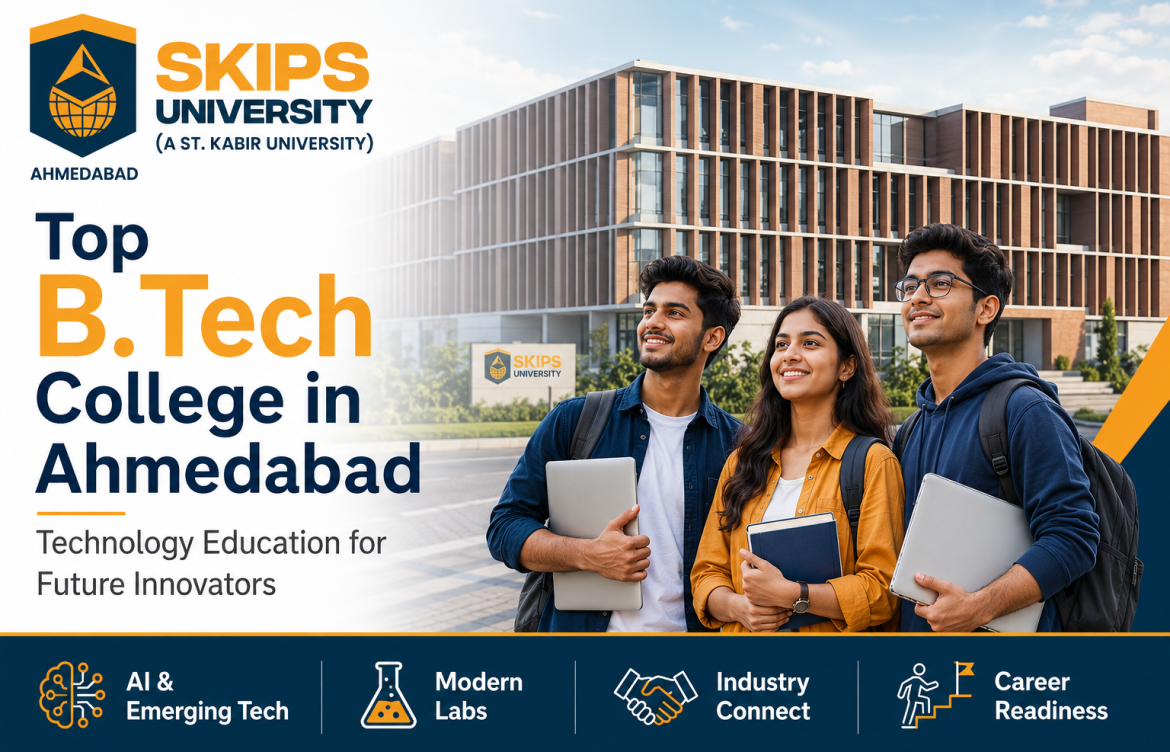
Top B.Tech College in Ahmedabad for Computer Science and IT: A Practical Guide for Students and Parents
Choosing a B.Tech college is a major decision. It can shape what a student learns, the skills they build, the people they meet, and the career opportunities they may receive after graduation.
Ahmedabad has several engineering colleges and universities. While having many choices is helpful, it can also make the admission process confusing.
Students often search for the top B.Tech college in Ahmedabad, but a college should not be selected only because of advertisements, rankings, campus size, or a high placement package shown in a brochure.
A good B.Tech college should offer:
- Strong teaching
- A clear and updated curriculum
- Practical laboratory sessions
- Real projects
- Experienced faculty
- Internship support
- Career training
- Transparent fee and placement information
This guide explains what students and parents should check while comparing B.Tech colleges in Ahmedabad. It also provides an overview of the B.Tech in Computer Science and Information Technology programme at SKIPS University.
Quick Answer
A top B.Tech college in Ahmedabad should teach the basic concepts of Computer Science while also helping students understand newer technologies such as Artificial Intelligence, Data Science, Cloud Computing, Cybersecurity, and Generative AI.
The programme should include regular coding practice, projects, internships, communication training, and career support.
SKIPS University offers a four-year B.Tech programme in Computer Science and Information Technology. Its curriculum is enriched in collaboration with IBM and includes core Computer Science subjects, practical learning, project work, technology exposure, and employability training.
Students should compare the programme with other colleges, visit the campus, read the latest syllabus, and verify admission and fee details before making a final decision.
Why Study B.Tech in Computer Science and IT?
Technology is now part of almost every industry.
Banks use digital payment systems. Hospitals use software to manage patient information. Factories use automation. Schools use online learning platforms. Retail businesses use websites, mobile applications, and data tools.
Because of this, organisations need people who understand computers, software, networks, data, and digital systems.
A B.Tech in Computer Science and IT can help students learn how to:
- Write computer programs
- Develop websites and mobile applications
- Create and manage databases
- Build software systems
- Work with Artificial Intelligence
- Analyse data
- Use cloud platforms
- Protect systems from cyber threats
- Solve business problems using technology
Computer Science can be a suitable choice for students who enjoy logical thinking, problem-solving, mathematics, and technology.
However, students should not choose this field only because they have heard about high salaries. The course requires regular practice, patience, and a willingness to keep learning.
Is Ahmedabad a Good Place to Study B.Tech?
Ahmedabad is one of Gujarat’s major education, business, and industrial centres.
The wider Ahmedabad–Gandhinagar region has universities, IT companies, startups, financial organisations, manufacturing businesses, and professional service companies.
Students studying in this region may get opportunities to attend:
- Technology workshops
- Industry visits
- Guest lectures
- Hackathons
- Startup events
- Internship programmes
- Career fairs
- Professional networking events
The growth of GIFT City and other business areas around Ahmedabad and Gandhinagar may also create more exposure to technology, finance, analytics, and digital services.
Location is useful, but it should not be the only reason for selecting a college.
The quality of teaching, curriculum, faculty, laboratories, projects, fees, and student support are equally important.
What Makes a B.Tech College a Good Choice?
There is no single college that is best for every student.
The right choice depends on the student’s interests, preferred engineering branch, budget, location, career plans, and learning style.
Here are the most important factors to consider.
1. A Strong Computer Science Foundation
Technology changes quickly, but the basic subjects of Computer Science remain important.
A good B.Tech curriculum should include:
- Programming
- Data Structures
- Algorithms
- Database Management Systems
- Operating Systems
- Computer Networks
- Software Engineering
- Computer Architecture
- Web Development
- Mathematics for Computing
These subjects help students understand how software, applications, databases, networks, and computer systems work.
Students who understand the basics properly can learn new programming languages and tools more easily in the future.
2. Learning Beyond Basic Coding
Modern technology careers require more than basic programming.
A current B.Tech programme should introduce students to areas such as:
- Artificial Intelligence
- Machine Learning
- Data Science
- Cloud Computing
- Cybersecurity
- Big Data
- Data Visualisation
- Mobile Application Development
- Natural Language Processing
- Computer Vision
- Generative AI
However, students should check how these subjects are taught.
Simply adding terms such as “AI”, “Data Science”, or “Future-Ready” to a programme name does not make the course strong.
Ask whether these topics include practical work, projects, laboratory sessions, and proper assessment.
3. Practical Learning and Coding Practice
Engineering cannot be learned only through textbooks and classroom lectures.
Students need regular practice.
A useful B.Tech programme should include:
- Coding exercises
- Computer laboratory sessions
- Individual assignments
- Team projects
- Technical presentations
- Hackathons
- Live problem-solving
- Internship opportunities
- A final-year project
Practical learning helps students understand where and how their classroom knowledge can be used.
It also helps students create a portfolio for internships and job interviews.
A student portfolio may include:
- GitHub projects
- Websites
- Mobile applications
- Data dashboards
- Machine-learning models
- Cloud-based applications
- Technical reports
- Research work
4. Experienced and Supportive Faculty
Faculty members have a direct effect on the quality of learning.
Before taking admission, students should check:
- Faculty qualifications
- Teaching experience
- Industry experience
- Research work
- Technical specialisation
- Subjects taught by each faculty member
- Availability of academic mentors
Students can also speak with current students to understand whether faculty members explain difficult topics clearly and provide support during practical sessions and projects.
A good teacher should help students understand a concept instead of simply completing the syllabus.
5. Computer Laboratories and Learning Resources
Students need access to properly maintained computers, software, internet facilities, and digital resources.
During a campus visit, check:
- Number of computer laboratories
- Quality of computer systems
- Internet speed
- Software availability
- Cloud platform access
- Laboratory timings
- Technical support
- Library resources
- Project workspaces
Students should also ask whether they can use the laboratories outside regular class hours for practice and project work.
6. Projects and Internships
Projects help students apply what they have learned.
A good project should solve a clear problem. It should not be copied from the internet or purchased from someone else.
Students may work on projects such as:
- Business websites
- Mobile applications
- Student management systems
- Data dashboards
- AI-based tools
- Machine-learning models
- Cloud applications
- Database systems
- Cybersecurity solutions
- Business automation tools
Internships can also help students understand how companies work.
Before admission, ask:
- Are internships compulsory?
- Does the university help students find internships?
- Which companies offered internships in recent years?
- Are internships paid or unpaid?
- How are students selected?
- Does the faculty guide students during internships?
- Is a final internship report required?
Clear answers will help students understand the actual level of industry exposure.
7. Career and Communication Skills
Technical knowledge is important, but companies also look for people who can communicate clearly and work well with others.
Students should learn how to:
- Explain a technical project
- Write professional emails
- Prepare a résumé
- Work in a team
- Give a presentation
- Attend an interview
- Solve unfamiliar problems
- Manage time
- Accept and use feedback
A good B.Tech programme should support communication, aptitude, personality development, and interview preparation throughout the course.
These skills should not be left only for the final semester.
8. Clear Placement Information
Placement support is important, but students should check placement claims carefully.
Do not judge a college only by the highest package shown in an advertisement.
Ask for:
- The latest placement report
- Branch-wise placement information
- Number of eligible students
- Number of placed students
- Average salary
- Median salary
- Highest salary
- Job roles offered
- Names of recruiting companies
- Internship information
- On-campus and off-campus placement details
A list of company logos does not always mean that every company hired students from the B.Tech programme.
Placement results also depend on the student’s knowledge, projects, communication skills, academic performance, interview preparation, and current job-market conditions.
No college can guarantee the same career result for every student.
About B.Tech at SKIPS University
SKIPS University offers a B.Tech in Computer Science and Information Technology.
The four-year programme is designed to help students build a foundation in programming, software development, databases, networking, Artificial Intelligence, Data Science, Cloud Computing, Cybersecurity, and other areas of technology.
The curriculum is enriched in collaboration with IBM.
Programme Overview
| Programme detail | Information |
| Programme | B.Tech in Computer Science and Information Technology |
| Duration | Four years |
| Academic structure | Eight semesters |
| Curriculum exposure | Enriched in collaboration with IBM |
| Learning method | Classroom teaching, laboratories, projects, and practical training |
| Final-stage learning | Internship or major project, based on the approved programme structure |
Programme details may change. Students should check the latest official syllabus and admission information before applying.
What Will Students Learn?
The programme includes basic engineering subjects, core Computer Science topics, and newer technology areas.
Foundation-Level Subjects
In the early semesters, students may study subjects such as:
- Programming using C
- Mathematics
- Physics
- Digital Electronics
- Engineering Graphics
- Basic Electrical and Electronics Engineering
- Communication Skills
- Environmental Science
- Foundations of Artificial Intelligence
These subjects help students develop basic technical knowledge, logical thinking, and problem-solving ability.
Core Computer Science Subjects
As students move to higher semesters, they study important subjects such as:
- Data Structures
- Object-Oriented Programming
- Java
- C++
- Python
- Database Management Systems
- Operating Systems
- Computer Networks
- Software Engineering
- Computer Organisation
- Design and Analysis of Algorithms
- Software Testing
- Microprocessors
These subjects are useful for many technology careers.
A student who understands these concepts properly will be better prepared to learn new tools and platforms later.
Artificial Intelligence and Data-Related Subjects
The published programme structure also includes learning in areas such as:
- Python for Data Science
- Data Visualisation
- Machine Learning
- Big Data
- Deep Learning
- Predictive Modelling
- Natural Language Processing
- Computer Vision
- Generative AI
- Prompt Engineering
Students should understand that learning Artificial Intelligence requires more than using tools such as chatbots.
It also requires knowledge of programming, data, mathematics, testing, and responsible use of technology.
Practical Learning at SKIPS University
According to the programme information published by SKIPS University, the course includes classroom learning, project work, hands-on training, language development, and employability support.
The programme page highlights:
- More than 2,300 hours of active learning
- More than 600 hours of project work
- More than 250 hours of hands-on training
- More than 170 hours of language training
- More than 110 hours of employability training
- More than 10 industry-certification pathways
Students and parents should confirm these figures against the latest approved programme structure.
They should also ask how these hours are divided across semesters and how project work is assessed.
IBM-Enriched Curriculum
The B.Tech curriculum at SKIPS University is enriched in collaboration with IBM.
The programme may provide learning exposure in areas such as:
- Artificial Intelligence
- Data Science
- Machine Learning
- Data Visualisation
- Deep Learning
- Predictive Modelling
- Generative AI
Students should ask the admissions or academic team for complete details about the collaboration.
Useful questions include:
- Which subjects are linked with IBM?
- Who teaches these subjects?
- Are IBM trainers directly involved?
- Which learning materials are provided?
- Are certifications included in the course fee?
- Are external examination fees included?
- Are the certifications compulsory or optional?
Clear written answers will help students understand the exact value of the collaboration.
Certification Opportunities
The programme page mentions certification opportunities connected with areas such as:
- Amazon Web Services
- Microsoft Azure
- Artificial Intelligence
- Machine Learning
- Data Science
- Power BI
- Cybersecurity
- Cloud Computing
- Agile practices
- Virtual internships
Certifications can support a student’s résumé, but a certificate alone does not guarantee a job.
Students should combine certifications with:
- Strong subject knowledge
- Coding practice
- Projects
- Internships
- Communication skills
- Interview preparation
Skills Students Can Develop
A B.Tech in Computer Science and IT can help students build both technical and professional skills.
Technical Skills
Students may develop knowledge in:
- Programming
- Software development
- Data structures
- Algorithms
- Database management
- Web development
- Mobile application development
- Artificial Intelligence
- Data analysis
- Machine Learning
- Cloud Computing
- Cybersecurity
- Software testing
- Computer networking
Professional Skills
Students may also improve:
- Communication
- Teamwork
- Presentation
- Time management
- Problem-solving
- Creative thinking
- Leadership
- Project management
- Interview performance
- Workplace behaviour
The level of improvement depends on the student’s attendance, effort, practice, and participation.
Career Options After B.Tech in Computer Science and IT
Computer Science graduates can find opportunities in technology companies as well as in banks, hospitals, manufacturing companies, consulting firms, schools, startups, and e-commerce businesses.
Possible career roles include:
Software Developer
Software developers create, test, improve, and maintain computer applications.
They may work on websites, mobile applications, business software, or backend systems.
Full-Stack Developer
A full-stack developer works on both the user-facing part and the server-side part of a website or application.
Data Analyst
A data analyst studies information, creates reports, identifies patterns, and helps organisations make better decisions.
Machine-Learning Engineer
A machine-learning engineer develops systems that use data to make predictions or automate certain tasks.
Artificial Intelligence Engineer
An AI engineer works on applications that use Artificial Intelligence for language processing, recommendations, automation, image recognition, or other functions.
Cybersecurity Analyst
A cybersecurity analyst helps protect computer systems, networks, and business data from online threats.
Cloud Engineer
A cloud engineer helps companies build and manage systems on cloud platforms such as AWS, Microsoft Azure, or Google Cloud.
Network Engineer
A network engineer manages communication systems and helps keep them secure and reliable.
Software Tester
A software tester checks applications for errors and helps improve their quality before release.
Business Analyst
A business analyst understands business needs and helps technology teams create suitable digital solutions.
Technology Consultant
A technology consultant helps organisations choose, use, and improve software and digital systems.
Product Manager
A product manager works with developers, designers, users, and business teams to plan and improve technology products.
Career results depend on the student’s knowledge, projects, portfolio, internships, communication skills, and interview performance.
Who Should Choose B.Tech in Computer Science and IT?
This programme may be suitable for students who:
- Enjoy using computers
- Like solving logical problems
- Want to learn programming
- Are interested in Artificial Intelligence
- Want to build websites or applications
- Are interested in Data Science
- Want to learn Cloud Computing
- Are curious about Cybersecurity
- Are willing to practise regularly
- Can adapt to new technologies
Students should choose the programme because they are interested in technology, not only because of salary expectations.
Technology changes quickly. Students need to continue learning even after completing their degree.
B.Tech Eligibility and Admission
Admission rules may change based on university, government, and admission-authority guidelines.
Students should verify the latest eligibility criteria before applying.
Depending on the admission process, students may need:
- Class 10 marksheet
- Class 12 marksheet
- School-leaving certificate
- Identity proof
- Passport-size photographs
- Entrance-examination details
- Category certificate, where applicable
- Migration certificate, where applicable
- Other documents requested by the university
Before paying an application or admission fee, students should ask for written information about:
- Required Class 12 subjects
- Minimum marks
- Accepted entrance examinations
- Admission process
- Tuition fee
- Examination fee
- Certification charges
- Scholarship conditions
- Refund policy
- Hostel charges
- Transport charges
Students should always rely on the latest official information.
How to Compare B.Tech Colleges in Ahmedabad
Students and parents can create a simple comparison table before making a decision.
| Point to compare | College 1 | College 2 | College 3 |
| Curriculum | |||
| Faculty experience | |||
| Computer laboratories | |||
| Practical sessions | |||
| Student projects | |||
| Internship support | |||
| Certifications | |||
| Placement information | |||
| Total fees | |||
| Hostel and transport | |||
| Campus location | |||
| Student support |
This method helps families compare facts instead of depending only on advertisements.
Questions to Ask During a Campus Visit
A campus visit can help students understand the actual learning environment.
Questions About Teaching
- Who teaches the main Computer Science subjects?
- What are the faculty qualifications?
- How many practical classes are held each week?
- How are students helped if they find coding difficult?
- Is personal academic support available?
Questions About Projects
- Can we see projects made by current students?
- Are projects individual or group-based?
- Does the university support student portfolios?
- Do students use GitHub?
- Are real industry problems used in projects?
Questions About Internships
- Which companies offered internships recently?
- How many students completed internships?
- Does the university help students apply?
- Are internships part of the course?
- Are any extra internship fees charged?
Questions About Placements
- Can we see the latest B.Tech placement report?
- How many students were eligible?
- How many students were placed?
- What was the average salary?
- What was the median salary?
- Which job roles were offered?
- Were the jobs on-campus or off-campus?
Questions About Fees
- What is the total four-year cost?
- Are examination fees included?
- Are certification charges included?
- Can fees increase during the programme?
- What are the hostel and food charges?
- What is the refund policy?
Clear answers will help students and parents make a better-informed decision.
Frequently Asked Questions
Which is the top B.Tech college in Ahmedabad?
There is no single answer that is correct for every student.
The right college depends on the engineering branch, curriculum, faculty, laboratories, projects, fees, location, internship support, and placement information.
Students interested in Computer Science and IT can compare SKIPS University with other colleges using these points.
Does SKIPS University offer B.Tech?
Yes. SKIPS University offers a four-year B.Tech programme in Computer Science and Information Technology.
What is the duration of the programme?
The B.Tech programme has a duration of four years and is divided into eight semesters.
Does the programme include Artificial Intelligence?
The published curriculum includes subjects related to Artificial Intelligence, Machine Learning, Data Science, Deep Learning, Computer Vision, Natural Language Processing, and Generative AI.
Students should check the latest semester-wise syllabus for updated information.
Is the curriculum enriched in collaboration with IBM?
Yes. SKIPS University states that its B.Tech curriculum is enriched in collaboration with IBM.
Students should ask for exact details about IBM-linked subjects, trainers, certifications, learning materials, and additional fees.
Does the programme include projects?
The published programme information highlights project work and hands-on learning.
Students should confirm how many projects are completed, how they are assessed, and what support is provided.
What jobs can students explore after B.Tech Computer Science?
Graduates may explore careers as:
- Software Developer
- Full-Stack Developer
- Data Analyst
- AI Engineer
- Machine-Learning Engineer
- Cloud Engineer
- Cybersecurity Analyst
- Network Engineer
- Software Tester
- Business Analyst
- Technology Consultant
Employment depends on the student’s skills, experience, projects, communication, and market conditions.
Is B.Tech Computer Science difficult?
The programme can be challenging because it includes programming, mathematics, algorithms, and technical subjects.
Students who attend classes regularly, practise coding, complete projects, and ask questions can manage the course more effectively.
Is Ahmedabad a good city for B.Tech students?
Ahmedabad and Gandhinagar have universities, startups, technology companies, industries, and growing financial and digital sectors.
This may provide useful exposure to internships, workshops, and professional events.
Students should still select a college based on academic quality and verified information.
Should students trust the highest placement package?
The highest package represents one offer and does not show the complete placement performance.
Students should also check the average salary, median salary, number of eligible students, number of students placed, job roles, and branch-wise results.
Final Conclusion
Finding a top B.Tech college in Ahmedabad requires careful research.
Students should not make their decision only because of an advertisement, ranking, campus image, company logo, or high salary claim.
The most important points to compare are:
- Curriculum
- Faculty
- Computer laboratories
- Practical learning
- Projects
- Internships
- Certifications
- Placement information
- Fees
- Location
- Student support
SKIPS University offers a four-year B.Tech in Computer Science and Information Technology.
The programme includes core Computer Science subjects, projects, practical learning, employability training, and exposure to Artificial Intelligence, Data Science, Cloud Computing, Cybersecurity, and Generative AI.
Its curriculum is enriched in collaboration with IBM.
Before taking admission, students and parents should read the latest official syllabus, visit the campus, meet faculty members, check available placement information, and understand the full fee structure.
A university can provide learning opportunities, guidance, and career support. However, the student’s regular effort, curiosity, coding practice, project work, and willingness to keep learning will play the biggest role in building a successful career.
Explore B.Tech at SKIPS University
Programme: B.Tech in Computer Science and Information Technology
Duration: Four years
Location: Ahmedabad, Gujarat
Phone: +91 95121 30000
Email: info@skipsuniversity.edu.in
Programme details, eligibility, fees, certification requirements, curriculum and admission dates may change. Students should verify the latest information directly with SKIPS University before applying.